The Second Harvest
Chairman Ely Stone had spent most of his life watching the sun come up over the same ridge.
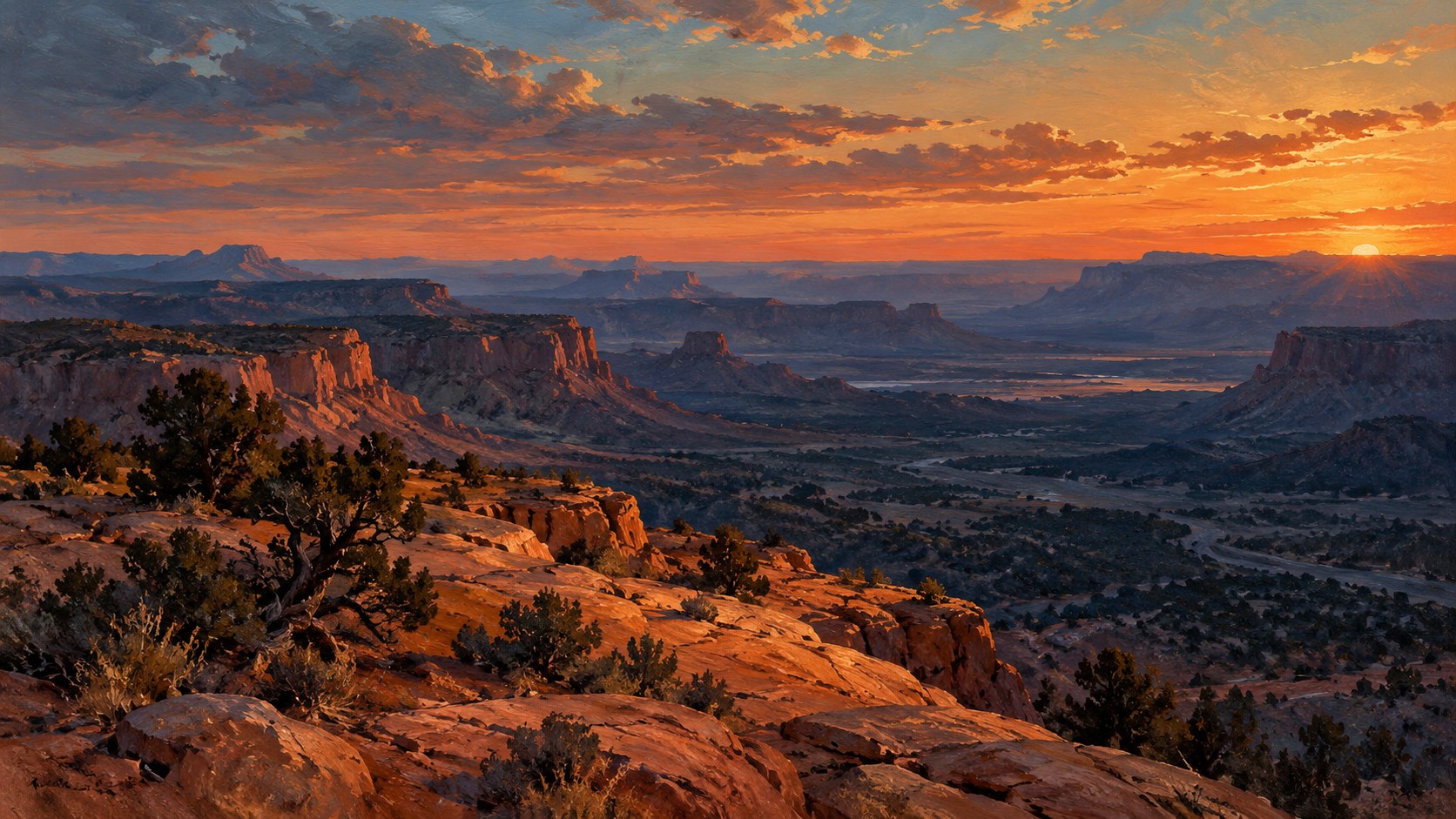
From the porch behind the Tribal administration building, the ridge did not look particularly valuable. Brown rock. Juniper. A dry wash that filled briefly after the summer storms and then disappeared again.
His grandfather had called it useless land.
His father had called it protected land.
By the time Ely became Chairman, outsiders had begun calling it strategic land.
That difference bothered him.
The land had not moved.
The world had.
A four-lane highway had been built twenty miles east. Transmission lines now crossed the southern boundary. A new freight route had shortened the drive to the interstate, and industrial developers had begun quietly buying property throughout the county.
Every few months someone came to Ely's office with a map.
They always brought maps.
Colored lines. Parcels. Arrows. Renderings of buildings that did not exist yet.
And they always seemed very excited.
Ely had learned that when another man became unusually excited about something you owned, it was usually worth asking why.
One October morning, a company from several states away requested a meeting.
They wanted approximately eight hundred acres near the southern edge of the reservation.
Their representatives arrived in two black SUVs and carried enough presentation binders to build a small wall.
Ely sat at the head of the conference table with his finance director, Teresa, and three Council members.
For almost an hour, the visitors explained their plans.
Warehousing.
Light manufacturing.
Battery storage.
Rail access someday, perhaps.
Several hundred jobs.
Millions of dollars of private investment.
When they finished, their lead executive leaned back with the satisfied expression of a man who believed he had made a very good presentation.
"We would like to discuss acquiring the property," he said.
Ely looked out the window.
The cottonwoods along the wash had begun turning yellow.
"Acquiring it?"
"Purchasing it, yes."
Ely nodded slowly.
"No."
The executive glanced down at his papers.
"I don't think we've discussed price."
"We don't need to."
The room became quiet.
The executive smiled politely. "Chairman, everything has a price."
Ely looked back at him.
"That's something people say when they want to buy what belongs to somebody else."
Teresa lowered her eyes to hide a smile.
Ely continued.
"You don't want our land."
The executive seemed genuinely confused.
"I assure you, sir, we do."
"No. You want what the land does for you."
Nobody spoke.
Ely pushed the development map back across the table.
"You want this location. You want the highway. You want the transmission corridor. You want the workforce. You want the acreage. You want to be here before your competitors figure out why you're here."
The executive stopped smiling.
Ely pointed at the map.
"So tell me what that is worth."
The meeting changed after that.
It took eleven months.
Lawyers came and went. Engineers drilled holes. Appraisers argued. Environmental consultants measured things nobody at the Council meeting had ever thought to measure.
The company did not buy the land.
Instead, it entered into a long-term development agreement with the Tribe.
The company would finance the buildings, roads, equipment, utility extensions and site improvements.
The Tribe would retain ownership of the underlying land.
There would be an annual ground payment, adjusted periodically over time. There would be additional payments if certain expansion milestones were reached. Tribal companies would have opportunities to compete for portions of the work, and the parties created a process for training and hiring Tribal members.
The final number was less important to Ely than something else.
For the first time, that quiet acreage had been turned into a contractual stream of money without disappearing from the Tribal map.
The night before the signing ceremony, Ely drove out there alone.
The desert was cold.
He turned off the engine and sat in silence.
Far away, red lights blinked on the transmission towers.
He thought about his grandfather.
Useless land.
Then about his father.
Protected land.
Neither man had been wrong.
They had simply lived at different moments.
The next morning the documents were signed.
Photographs were taken.
There were handshakes, speeches and the usual statements about partnership and opportunity.
Six months later, the first payment arrived.
That was when the difficult part began.
Everyone knew what money could do.
The housing department needed money.
The clinic needed money.
Several roads needed resurfacing.
The school had been asking for a new building for years.
Nobody was greedy.
That was what made the decision difficult.
Every request was legitimate.
At the Council meeting, Teresa placed the first payment report on the screen.
Ely listened for almost two hours.
Then he walked to the whiteboard.
He drew a circle.
Inside it he wrote:
THE LAND
Next to it he wrote:
THE PAYMENT
Then beneath the payment he drew three lines.
He turned around.
"My grandfather protected the land because he did not want us to lose it."
Nobody said anything.
"My father protected it because he believed someday it would matter."
Ely tapped the first circle.
"They gave us this."
Then he tapped the payment.
"This is not the land."
He drew another circle beneath it.
"This is what the land produced."
He paused.
"And if we spend every dollar it produces, then twenty years from now our children will still have one asset producing one payment."
One of the Council members leaned forward.
"What are you proposing?"
Ely drew another circle.
Then another.
"I want the first asset to help create the second."
Teresa understood immediately.
They decided that some of the income would be available for current Tribal priorities.
Some would be placed into a reserve that could not casually migrate back into the operating budget.
And some would be used to support a new investment.
Not a speculative investment.
Not a monument.
Something boring.
Something that paid.
They eventually chose a small commercial property outside the reservation near a growing medical district.
It already had tenants.
It already had income.
It did not require the Tribe to invent a business.
The original ground-lease income helped support the financing.
Three years after the first company had arrived with its maps, the Tribe owned its second substantial income-producing asset.
Nobody held a ceremony.
There were no television cameras.
The rent simply arrived.
Every month.
The following year, part of that income went into the reserve.
Part went toward the financing.
Part went back to the Tribe.
And part began accumulating for whatever came next.
By the sixth year, the original industrial site had expanded.
The company exercised an option on additional acreage.
The Tribe's commercial property had appreciated and its debt had declined.
The reserve had become large enough that Teresa no longer referred to it as an account.
She called it capital.
Other opportunities began arriving.
Solar developers.
A hotel group.
A logistics operator.
A company interested in building a regional food-distribution facility.
Ely noticed something had changed.
The outsiders no longer came to explain why the Tribe needed them.
They came prepared to explain why they needed the Tribe.
One evening, years later, Ely stood again behind the administration building.
The same ridge caught the last orange light of the day.
His granddaughter, who had been waiting for him to finish work, stood beside him.
She pointed toward the lights in the distance.
"Is that ours?"
Ely looked toward the industrial buildings.
"No."
She seemed disappointed.
"The land underneath it is."
She thought about that.
Then she pointed toward town.
"What about the building by the hospital?"
"Part of that is ours."
"The solar project?"
"Ours."
"The apartments Teresa showed us?"
"Some of those too."
The girl looked at him suspiciously.
"How did we buy all that?"
Ely smiled.
"We didn't."
She frowned.
He pointed toward the distant ridge.
"That bought the first one."
Then toward town.
"The first one helped buy the second."
He pointed farther south.
"The second helped buy the third."
She stared across the valley as though she were trying to see the invisible line connecting them.
"And then?"
Ely shrugged.
"Then we tried very hard not to interrupt it."
She laughed.
"That's it?"
"Mostly."
They stood quietly for another minute.
Then she asked the question Ely had hoped someday someone would ask.
"What will it buy after you're gone?"
He looked down at her.
"I don't know."
And for perhaps the first time in his years as Chairman, not knowing felt like success.
Because that decision would belong to her generation.
The land would still be there.
The income would still be working.
And somewhere between his grandfather's instinct to protect what they had and his granddaughter's freedom to decide what came next, the Tribe had discovered something that had been hiding in plain sight all along:
Wealth was not what they could sell.
It was what they could teach what they already owned to produce.
And prosperity was not the first harvest.
It was the decision to plant again.
A fictionalized story informed by real-world possibilities. Names, characters, and certain circumstances are changed to protect privacy.